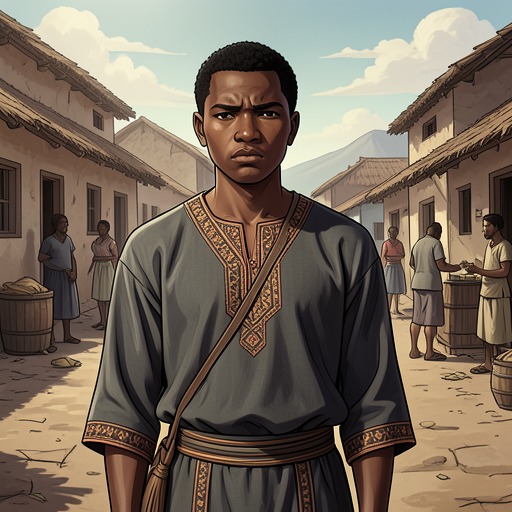
Marion Dorffling
Heart of the HunterMarion Dorffling is a decorated and highly valued Central Intelligence Agency field agent whose assassination in Paris in 1984 connects the novel’s present-day pursuit of Thobela Mpayipheli to his concealed past. Her importance lies not in a developed personal biography, which the available account does not provide, but in the changing evidentiary status of her death: first a suspected operation attributed to Mpayipheli, then a case confirmed by records, and finally a reason for the Central Intelligence Agency to send agents after him.
Identity and the Paris Assassination
The account identifies Dorffling as a senior field agent and veteran of particular value to the Central Intelligence Agency. She was killed in Paris in 1984. The report describes the assassin’s method as resembling that used in at least eleven other executions of American assets and operatives. That comparison places Dorffling’s death within a larger pattern of covert violence, rather than presenting it as an isolated crime, while the emphasis on her standing makes clear why the agency continued to treat the case as consequential.
The text supplies no scene of Dorffling’s life or death and does not describe her private relationships, beliefs, or motives. Her characterization is instead institutional: her professional distinction is stated, and her death is approached through the intelligence gathered about it. This narrow presentation makes her case a point of contact between an individual victim and the machinery of international intelligence, whose records and competing claims shape what can later be known about her.
Suspicion and the Intelligence Record
At first, the Central Intelligence Agency had enough information from Russian and Eastern European sources to conclude, or at least strongly suspect, that Mpayipheli was responsible. The same intelligence characterized him as an MK soldier lent by the African National Congress and SACP alliance to the KGB and East German Ministry for State Security as a specialist in assassinations. These details describe the agencies’ assessment of Mpayipheli; they do not establish that Dorffling herself knew of him or his role.
The distinction between suspicion and proof is central to the account. An unnamed member of the Central Intelligence Agency’s Paris team recalls having been a rookie there at the time of Dorffling’s death. Years later, after Mpayipheli’s involvement in Operation Safeguard became public, that former team member requested documentation from the Berlin field office, looking for material in former East German Ministry for State Security files that might support the earlier attribution. The request was answered within hours. Those records confirmed that Mpayipheli, under the codename Umzingeli, had assassinated Dorffling.
The confirmation arrives through an archive rather than a remembered encounter. The investigator’s recollection establishes proximity to the original case, but the retrospective conclusion depends on documents retrieved later. In the novel’s broader account of intelligence work, records are vulnerable to deletion, concealment, and competing institutional interests; the South African integration effort described elsewhere involves missing operational material and painstaking attempts to preserve information. Against that background, the Berlin files matter not simply as background detail but as evidence capable of converting a long-standing suspicion into a confirmed identification.
Consequences and Narrative Role
After receiving the confirmation, the former Paris team member notified Langley. The response from the Central Intelligence Agency’s deputy-director level was that the agency remained interested in settling the score. Two specialized agents from the London office were then sent to deal with the matter. The chain of action is direct: the public exposure of Mpayipheli’s involvement in Operation Safeguard reopens the old file; the East German records confirm his responsibility; and that confirmation leads to an operational response against him.
Dorffling’s case therefore reaches beyond the historical event itself. It gives the pursuit of Mpayipheli a second, retrospective cause: he is not only a fugitive carrying information in the present but also a man whose past actions remain legible to institutions that have preserved records of them. The agency’s language of settling a score also distinguishes its response from neutral fact-finding. The evidence establishes who killed Dorffling, but the next step is retaliatory action, showing how the preservation of a record can renew conflict rather than close it.
What the Account Establishes—and Withholds
Dorffling is not given an independent narrative voice, and the text does not explain her personal experience, the circumstances surrounding her work in Paris, or the precise evidence the East German files contained. It does establish her professional stature, the year and place of her assassination, the comparison with at least eleven similar killings, the initial intelligence-based suspicion of Mpayipheli, and the later documentary confirmation. It also identifies the institutional consequences of that confirmation, including the dispatch of two agents from London.
This limited but consequential portrait makes Dorffling a measure of how the novel’s account of Mpayipheli changes as evidence accumulates. The early attribution remains qualified; the later archival discovery removes that uncertainty. Her case thus links the fragmented record of the Cold War to the manhunt in the novel’s present, while preserving the difference between a victim’s identity and the intelligence apparatus that continues to act in her name.